
Insights
Terra Alpha Voices | Brian Cali
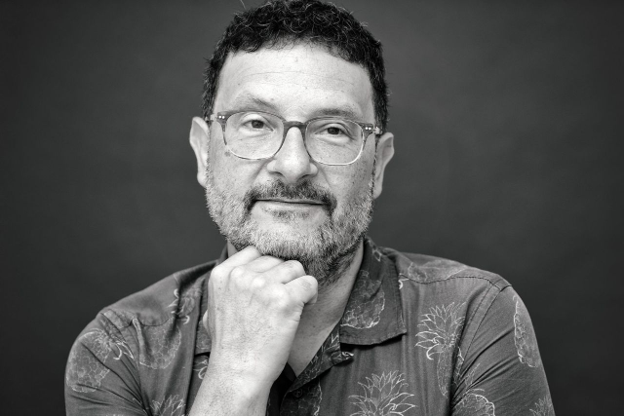
Editing by KK Ottesen. Photo by KK Ottesen
Brian Caliis an entrepreneur, scientist, executive, and investor. After decades in science and biotechnology and a fateful conversation, Brian turned the bulk of his attention to climate issues. He and his family are undertaking a net-zero retrofit and high-performance expansion of their 1782 Vermont farmhouse in Reading, Vermont, where they host climate retreats. Cali is a Terra Alpha investor.
_______
Can you talk about the path you took, first to your early work in biotech, and then to the climate work you do now?
I got my doctorate in molecular biology and came to Boston to do a postdoctoral fellowship, fully intending to become a professor. I met some people there, and realized that I loved collaborative science and the intersection of collaborative science and medicine. And so I ended up being part of a founding team of four that started a biotechnology company. Over a 20-plus-year run at that company, I did everything: ran research, did some commercial stuff. I loved that career and probably would have kept doing that until I couldn’t productively do that anymore, but then a few things happened.
One was a super seminal conversation with our youngest daughter, Jessie. We were out to dinner and she was probably, oh, 15 or so. She asked my wife and me if we were worried about climate change and how the world would not be viable for her generation, and said that the idea of bringing kids into that world was really daunting for her.
It was, literally, my worst parenting moment. Because I went into auto-mode, like, “Jessie, every generation has its challenges. You know, when Mom and I were growing up, it was the fear of nuclear war. Generations before faced world wars. These things always work out.”And I’m watching the disappointment, the lights go out in her eyes, as I’m speaking. I just – I so missed it. I disappointed her there. And I also realized, being trained as a scientist, that I didn’t have the data to help understand where we really were and give her an honest answer about how I felt. I didn’t know how I felt.
So, I started to look at the data hard and realized: This is very bad. (Laughs.) And we’re not doing anything really meaningful yet to be able to change this trajectory. I won’t say I “panicked,” because I don’t tend to panic, but it was anxiety-provoking, for sure. I couldn’t think about looking her in the eyes and saying,“It’s going to be fine.”Like, it’s not going to be fine. The question is: What is it going to be, and how are we going to help author the future that we want it to be?
In 2019, I had helped spin off another company from our major company, had done a big financing, it was great. We launched another company. I needed a break. My wife Sophie is a professor, and she had a sabbatical, and we had just empty-nested. So, we were going to take five months off, travel the world, and do all kinds of stuff. Then a friend of mine said, “If you can do it,”which I could, “take nine months off. Tell everybody who wants to hire you that you’re going to talk to them in September, or go start another biotech company.” This would have been December of 2019. And then, as you know, a pandemic happened.
Great timing for that sabbatical.
Well, I wouldn’t wish any of it on anybody, but it sort of was. It’s hard to work for 20-plus years with friends and colleagues and not have that moment of, like, what’s the next start-up, what’s the next thing that we can do? We were forced/gifted the opportunity to have some time for reflection. And what I found surprising was that that seed of thinking about climate had become a seed-ling. It had kind of emerged from the soil. I started to realize that my mind was spending more time thinking – Well, what about climate? What about you and climate? How do you engage with this? How does one move from anxiety to something productive?
So basically, the sabbatical allowed that to become the dominant thing that I spent my time on. And I realized that I wasn’t going to go back to biotech, that while I still care about innovation and healthcare and making new medicines, the vast majority of my time was going to be spent in the climate space.
And the daughter who put you on this path with her question, when did you have the next conversation with her about it?
It wasn’t like I went back the next day and said,“You know what, I stayed up all night, and…” But I definitely had a conversation with Jessie that said,“Look, that conversation, it was a bad moment for me. I didn’t answer that right. I don’t think I even knew how to answer it, and I went into auto-mode. That’s not the father that I want to be. It wasn’t a good answer.”
But it was a great question. It fundamentally changed my trajectory. I now serve on a couple boards, but, like, 80% of my time is on climate. I think it’s super important, and I want to do what I can.
Tell me, how and when you came across Terra Alpha, and got into impact investing?
Tim Dunn and I met each other at a Sierra Club board of directors meeting; we were both looking at whether or not we wanted to be directors. We struck up a conversation and I so enjoyed his thinking about how to approach this from the capitalist perspective. How to invest the resources that I was blessed to have through the success at Ironwood Pharmaceuticals – not just from a philanthropy perspective, but as it’s invested, what is it doing, who am I loaning money to, where is it going?
I had had some earlier interactions with people who were trying to do things like that. But they always led with,“You’ll have to take an expected discount on return for ‘doing good,’” right? That’s not a palatable thing to most people. Like, it’s a 10% return, but you can get 5% return if you do something that you’ll feel good about. It should be, you’ll get 10% return, regardless, and, actually, probably, over the long run, you’ll get better returns if you’re investing in companies that are going to be more resilient.
Strictly from an investing standpoint, it makes total sense to me that if you play the long game, companies that are confronting this [climate] reality and thinking about how to run their companies in that world – who are more water-efficient, who pollute less, who are thinking about the impacts of climate change writ large on their businesses – will be stronger and more viable businesses as things unfortunately start to transition as they are now. That’s just smart business. Secondly, engaging with companies and encouraging them to move along that path seems like good shareholder work. And Tim has tons of credibility from his past experience and connections to be able to help that happen. So I signed up for Terra Alpha’s environmental productivity metrics. And ultimately, we decided to put a significant portion of our net worth into Terra Alpha. Never regretted that choice.
As you’ve been diving in and getting your head around climate issues, what are inspiring examples you’ve seen, or things that give you hope?
That’s a really good question. I guess, what heartens me and gives me the most hope is realizing that there’s a broad network of people who care and are trying to make work happen locally — and it spans generations and socioeconomic groups. We don’t always hear it that way. I’m an ecoAmerica ambassador, and one of the things that they train about is how to have conversations about the stuff we all care about and not the things that polarize us.
For example, here in Reading, our little town of 600, you know, is super diverse financially, with people in energy poverty, I got involved in the energy board. Which has led to making the case for a town-owned solar array, which we have now bought, and it’s great and running. I put out reports every two months about how much energy we’ve made and how much savings. And we just won a grant to de-carbonize all the town buildings by using state monies – so the town doesn’t have to pay anything. And when I talk about the solar array, I never talk about planet change, ever, in the whole conversation with the town. I always talk about, we will save money.
Clearly you’re someone who tends toward action, but what is the biggest worry you have?
Well, what I worry most about is tipping points. I think there are things we cannot model and don’t understand – such as when we’ll have reached tipping points around things like melting ice and seawater rise, and the ultimate impacts those have. Like, when the Siberian permafrost starts to melt and all that methane gets dumped – methane is 20 times more potent than CO2 as a greenhouse gas – I don’t think we can model that stuff well. And it looks like some things are actually accelerating faster than people thought.
I’ve watchedDon’t Look Up. You know, people are really good at ignoring this stuff. You want to laugh and cry about the fact that we’re completely asleep at the switch on this situation. As a scientist, the data are really bad. They’re so bad.
Why do you think we are not focusing when the data is there; why are we putting our heads in the sand?
For a long time, the conversation was about future risk. People don’t respond to that. We respond to what’s right in front of us. That’s changing now because we cannot ignore L.A. burning. You know, everyone’s talking now about seeing things in their lived environment, stuff they’ve never seen in their lives before. There’s almost no one denying that climate change is happening at this point, or they’re pretty fringe.
But the dialogue has shifted to, “Well, it’s too late to do anything.”And that’s where I’m like, “No.”Because the difference between becoming Mars, which is 5-degree warming, and 3-degree warming, and 2-degree warming – every tenth of a degree matters. And if the planet that my daughters, and your daughters, and maybe there’s another generation beyond that, will inherit is going to be livable, the difference in every tenth of a degree matters to their lives. It gives a chance for that reverse to start happening.
What does not work is to talk about the gloom and doom of the future. People tried it for a long time. It just makes people pull away because it’s painful. That’s why we need this what-if-we-get-it-right image. Like: Let me tell you what a beautiful future on a vibrant planet looks like.
So if you could snap your fingers and make something happen — poof! — what would it be?
A fully electrified energy system that is derived from renewable and clean sources of energy. Which is totally doable. Totally. It is a host of different things that can allow us to get there. But that world is quieter. It’s cleaner. The air is nicer to breathe. Living in a fully electrified house is more beautiful. There’s less pollution. And we do it in a way that doesn’t site all the things that need to get done in the poorest communities. Like all of our battery storage or whatever.
It’s more resilient, too, because it’s distributed energy. And it’s stored locally. And this is one of the things we’re working on here in Vermont, too – when the grid gets taken down, but you’ve got solar panels and batteries at the firehouse, and local distribution, you can power a bunch of things even when things go down — I’ve seen countless examples. And because we’ve put clean energy in there, we’ve stopped the pollution that is accelerating this change that we all don’t want to see.
What’s advice you give people or advice you live by?
My advice is, act. Get involved. Do something. Make it small.
Joanna Macy created this paradigm called Active Hope. I love the words because “hope” is this ephemeral thing, like just passively waiting for something good to happen. And that doesn’t usually get you where you want to be. She’s created this wonderful paradigm, a flow, really, that starts with gratitude, which roots people, which reminds people that they’re not alone. That there is beauty in the world, that they are connected to each other and to other things.
Then you move into the hardest part, which is talking about what concerns you most. Like I’m really worried about the future my children, and actually the whole generation of people that I love directly or indirectly, are going to face. I feel remorse that my generation hasn’t done more up until now to stop that because we had the ability to do it when it would have been easy. And now it’s going to be hard. So, you need to allow that grief to be expressed.
Then, she asks people to think through new eyes. Like, okay, tell me places where you see things happening that are interesting. And then: how do you want to participate? The idea is to move somebody from,I’m stuck in an anxiety loop, to,I can take an action. Because the antidote to anxiety is action.
That’s a great framework.
That’s what led me to help create climate retreats using Vermont as the backdrop, being in nature. I want to run three or four a year. The first two, what I loved about them, and will always be a requirement, is we had people from mid-20s to 70, sharing across generations. And we’ve integrated the work of Ayana Elizabeth Johnson, an amazing climate scientist and oceanographer. She had this concept of creating your own Venn diagram for how you can engage in climate work, and it’s basically three circles: What am I good at? What do I love to do that brings me joy? And what needs doing? When you find the intersection of those three things, working there will be sustainable for you. It will be work that you feel competent in, work that needs to be done, and it brings you joy.
People are all different. Like, someone’s an artist and what they’re good at is depicting things in a way that moves others. Great. We need that. Are you a financial analyst? We need that too. An engineer? We need that too. (Laughs.) We need everybody.